

We make your business future proof
Globe Marine Consultancy offers expertise in sustainability, efficiency and regulatory compliance.
Net Zero Strategy and Decarbonisation Solutions – Sustainability Management
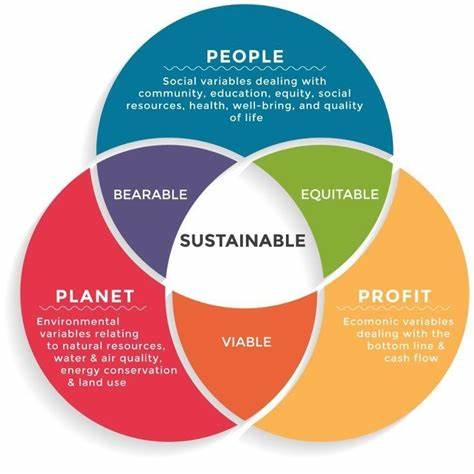
Sustainability Strategy
Develop a holistic net-zero strategy, science-based targets, and a customised action plan to meet decarbonisation targets within realistic budgets and timelines.
Regulatory Compliance
Optimise investment in current and future shipping operations and vessels, to comply with IMO and EU emissions regulations compliance (MRV, Fuel EU, EEXI, CII).

Sustainability and ESG Management and Reporting
Create outstanding and meaningful environmental and social impact, comply with the CSRD Reporting directive, and excel in your ESG strategy and reporting.
Sustainability is proof that your business is reliable for long-term investment
“
Sustainability is the harmonious integration of the environment, the economy, and ethical values.”
“
Sustainability is designed to endure indefinitely, making it a crucial goal for us to pursue.”
News
October 2024
Reduction of GHG emissions from ships – Outcome of Comprehensive Impact Assessment by IMO Marine Environment Protection
Committee (MEPC 82) – is where the reduction of shipping’s impact on the marine environment is discussed. The meeting was held in London on 30. September – 4 October 2024.
Development of Mid-Term Measures
One of the measures considered was the economic measure by EU Members, Japan, and the EU Commission: “Economic measure: from 2028 ships pay 100 USD/tonne CO2 equivalent (CO2e) for their emissions in the preceding year.”
MEPC 82 was preceded by the 17th session of the Intersessional Working Group on Reduction of Green House Gas Emissions from Ships (ISWG-GHG 17) the week before MEPC 82.
ISWG-GHG 17 considered the ‘basket of candidate mid-term measures’ which has been re-framed as the ‘IMO
Net-Zero Framework’ for agreement at MEPC 83 (April 2025).
The framework sets out a new MARPOL Annex VI “Chapter 5 – Regulations on the IMO net-zero framework”,
framework, which will include sub-chapters on:
1) Goal-based marine fuel standard regulating the phased reduction of the marine fuel’s GHG intensity
2) Economic mechanism(s) to incentivise the transition to net-zero
CONCLUSIONS: There was a broad agreement on an architecture for a fuel standard, but further discussion is required to agree how a ship or collection of ships must meet that standard (i.e. is flexible compliance through pooling of compliance with a group of ships and ability to pay for compliance units etc or not), and what the exact trajectory for reducing the GFI would be.
There is also a need for further discussion on the design of the economic measure.
Outcomes Relevant for Energy Efficiency of Ships: Short-Term GHG Measures (CII and EEXI)
CII gaps and challenges were identified and reviewed. Some of the gaps being for example that CII does not allow for (amongst other factors) idle time, port waiting time, short voyages, cruise, passenger ships with significant time in ports, ships which use significant energy in loading/unloading and cargo handling/storage, and ships operating in adverse weather;
Challenges will be addressed in two phases of MPEC sessions, before and after January 2026.
The Fifth IMO GHG Study is announced with possible timeline for completing by 2026.
MEPC 82 noted proposals related to the Fifth Study which, among other things were:
- to analyse the relationship between maritime emissions and the nature of traded goods (energy and non-energy)
- 2008 as a comparator year for emissions levels needs to be better defined. Specifically, Fifth Study should require production of inventories covering voyage and vessel-based CO2 and GHG missions, TtW and WtW emissions for 2008 and any future period such as 2018 onward;
- the Study should include a recommendation on the choice of the 2008 baseline;
- the Study should prioritise a forecast of shipping demand to help calculate CII reduction rates going forward beyond 2026;
Interim CII reduction rates should be set as part of the CII review until the Fifth Study is received. The study should assess the age of ships and the availability of zero and near-zero emission fuels. It should also present information regionally to allow monitoring of any regional trends in emissions inventories.

Start your SMART journey to meet net-zero targets.
Digitalisation
Electrification
Emissions Tax Optimisation
 Net Zero Strategy and Decarbonisation Solutions I Globe Marine